Youth Mental Health Learning Cohort
Supporting young people takes strong, connected organizations. See how shared learning helped local partners build relationships, strengthen their work, and launch new collaborations.
Showing Up When Youth Need Us
Nonprofits are known for doing more with less. Locally, we’re fortunate to have many organizations full of caring people who show up every day and meet enormous needs with limited resources. At the same time—as we shared last year in our story on The State of South Sound Nonprofits—stretching so thin has a cost.
As the strain of growing needs and dwindling resources catches up to many community-serving organizations, it is especially real for frontline staff who serve youth. They are concerned for the youth they work with, and for good reason. Survey statistics confirm that many young people are struggling—60% of tenth graders report feeling nervous, anxious, on edge, or constantly worrying; over half of WA youth experience anxiety and/or depression; and 15% report having contemplated suicide in the past 12 months.
Youth-serving nonprofit staff know that supporting young people well requires more than commitment and care. They need opportunities to connect with others doing this work, keep growing their skills and expertise, and tend to their own resilience. They know that pausing for professional development and connection isn't optional when youth well-being is on the line. But knowing something matters and finding the time and resources to do it are two very different things.
Building a Responsive Program
At the Community Foundation, we listen and learn to better understand local challenges and the role philanthropy can play. As we wrapped up awards from our Resilience Fund—a grant program to help our community recover from the impacts of COVID—we asked organizations what they were seeing in the communities and what needs were emerging. Again and again, we heard about the strain facing young people and the organizations that support them.
Over the course of a year and about 50 conversations with community members, service providers, educators, healthcare professionals, and local leaders we shaped our understanding. Many youth-serving organizations shared that they were often working in isolation and in survival mode themselves. They needed better connections, stronger resources, and help making space for both. Helping create that space was a role we could fill.
"We have a somewhat unique role in our ability to convene around issues,” says Community Foundation President and CEO, Mindie Reule. “We realized this was a place where we could help create space for organizations doing important work with young people and families. We're not saying, ‘Here's what you do.’ We're saying, ‘Here are some resources and a chance to learn together.”
In that spirit, we created the Youth Mental Health & Well-being Fund and launched the Youth Mental Health Learning Cohort—a year-long pilot program bringing together youth-serving organizations from Lewis, Mason, and Thurston counties for shared training, peer learning, and relationship building, with a goal to strengthen the entire network of support available to young people in our region.
Connecting, Learning, and Collaborating
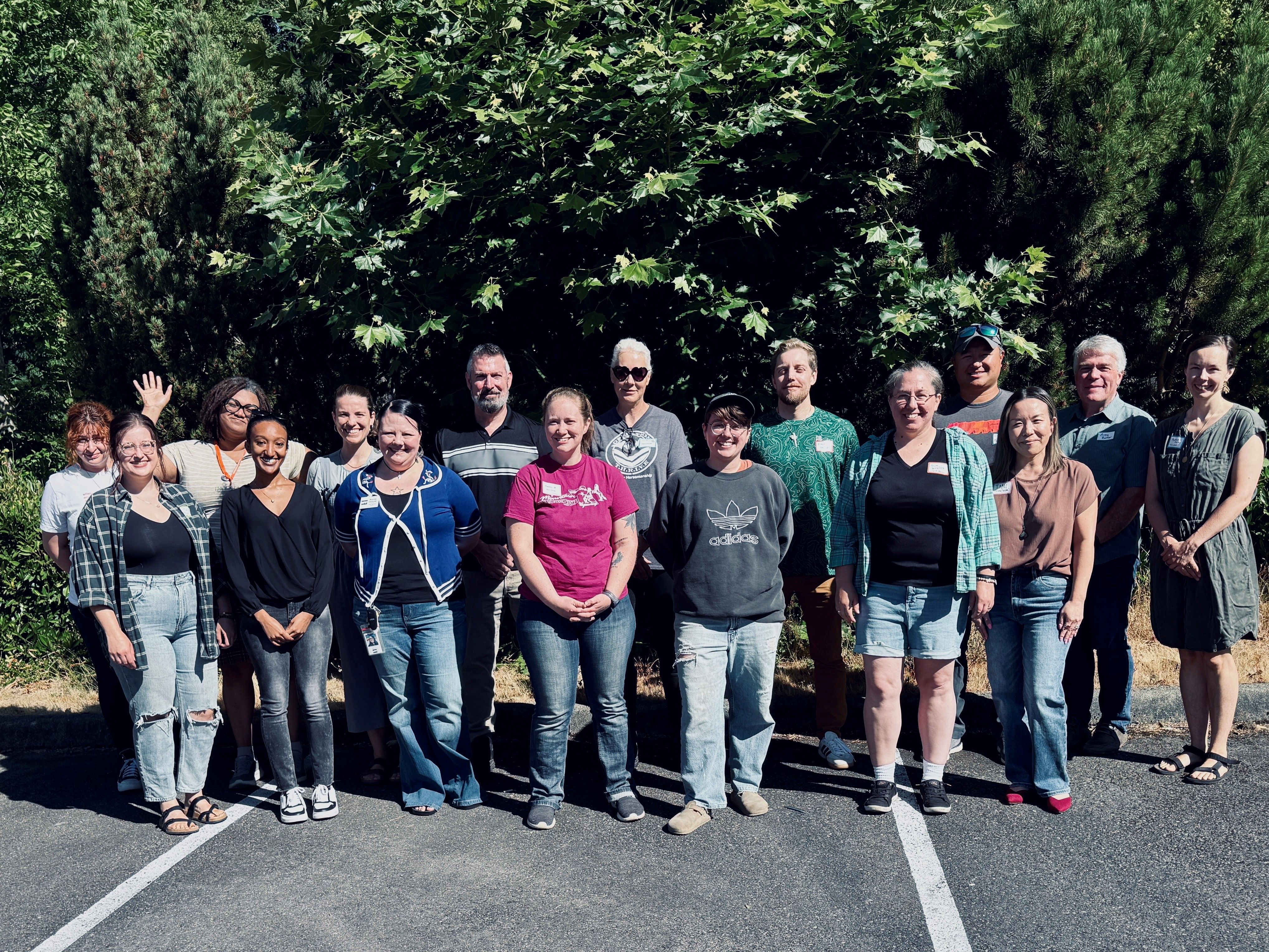
In the fall of 2024, thirteen youth-serving organizations from across Lewis, Mason, and Thurston counties joined the cohort. Together, they represented a rich cross-section of people serving youth through programs ranging from outdoor education to dance to emergency shelter, foster care, and street outreach.
Throughout the year, organizations sent two to four staff members to monthly sessions while continuing to carry the full weight of their everyday work. To help offset those costs, each organization received $10,000 to support staff time, mileage, and the ability to step away from daily operations to participate. Training was led by the Community Resilience Initiative (CRI), a nationally recognized leader in trauma-informed care, and CRI’s Master Trainer Rick Griffin became a respected presence for the cohort.
Rick's expertise and CRI's curriculum were valuable—giving participants more confidence, knowledge, and practical tools—but that was only part of the picture. When we surveyed participants at the start, most recognized only four other organizations in the room. By the end of the year, they not only knew each other but understood how they were connected as partners, resources, and allies in the work.
When we asked for feedback, many mentioned their connections with each other, right alongside the training, as the most valuable thing they gained. One participant captured a sentiment shared by many: "These relationships have created meaningful opportunities to share resources and ideas, including grant opportunities, networking support, fundraising strategies, and program development ideas." Another described the connections formed as having a "domino effect" that is still unfolding as cohort members continue to strengthen their collective network.
An Upstream Approach
Perhaps one of the most surprising things people gained by joining the cohort was a chance to pause and tend to their own well-being. The cohort’s first in-person meeting included time with a facilitator from True Self Yoga who led the group through grounding exercises and mindfulness practices. Several participants brought these tools back to the youth they serve, while many also found the practices valuable for themselves.
The idea to begin this way came from our Program Officer, Tami Mason-Lathrop, who drew on her own extensive experience serving youth in community-based organizations. Informed by that perspective, Tami understood that adults working with youth are too often trying to support others while carrying a great deal themselves.
"Our thought was really an upstream approach,” Tami shares. “If we want to better support youth, we need to support the people serving them first. That meant giving folks real, tangible tools they could use to regulate themselves, so they could then support youth who might be unregulated. And the beautiful thing is, these are tools anyone can use, youth and adults alike."
For many participants, having a space to breathe, move, and reconnect with themselves was both unexpected and deeply welcome. These moments of pausing and self-nourishment continued beyond the initial session. Participants invested in their own and each other’s well-being over shared meals at ASHHO Cultural Community Center, side conversations, mutual site visits, and a joyful end of year celebration.
Paradoxes and Honest Tensions
While the Youth Mental Health Learning Cohort was valuable, it was a pilot program that had its share of challenges and lessons. Even with extra funding for staff time and costs, the time commitment was a big lift, especially for smaller nonprofits without large teams to cover responsibilities.
We alternated in-person and virtual meetings, holding some of our three-hour training sessions on Zoom. This reduced travel for participants coming from across the region, but the virtual format came with fatigue and learning challenges. Bringing together organizations of different sizes and levels of expertise also meant the training felt introductory for some and more advanced for others. That gap, combined with the virtual platform and staff turnover for some organizations, made it difficult for some to get the most out of each session.
This experience gave us a lot to reflect on as a funder. We heard clearly that youth-serving organizations needed space to pause, learn, and connect. We also saw how difficult it can be to make that space when staff are already stretched and the needs around them are urgent. That tension was part of the pilot, and it will shape how we continue learning and supporting this work.
From Cohort to Collaboration
Despite the challenges, participants gained a lot. End-of-year surveys showed meaningful growth in participants’ understanding of trauma, Adverse Childhood Experiences (ACEs), and resilience. Participants also reported feeling ready to apply what they’d learned. That application has already started with actions ranging from updated staff training, added reflection practices, more youth voice in programming, and revised policies to better reflect trauma-informed values.
Whether they came in as beginners or seasoned practitioners, participants left with something new. As one shared, "Being staff of a small nonprofit, we don't often get to spend our time simply learning. It has been a welcome change of pace."
Perhaps the clearest sign of the cohort’s impact came in what participants chose to do next. At the end of the year, five pairs of organizations submitted proposals for Collaborative Learning Awards—grants of up to $10,000 to put what they had learned into practice together.
We funded these five proposals:
- Wolf Haven International and HeartStrides Therapeutic Horsemanship are piloting TraumaWise, a full-day training for K-12 educators at a wolf sanctuary and a horse ranch, teaching resilience through the lens of animals and nature.
- GRuB and NAMI Thurston-Mason are partnering to expand mental health literacy and community-building for youth and young adults, combining GRuB's games facilitation training with NAMI's evidence-based mental health programming.
- South Sound Dance Access and the Washington School Principals’ Education Foundation are bringing NEAR science and resilience-building strategies through Brain-Compatible Dance Education into local classrooms and Cispus Learning Center.
- Our Ark and Ground Zero are taking trauma-informed care to the streets, providing outreach, resources, and compassionate support to unhoused youth and young adults. The program will provide essential supplies, resources, and support.
- Mason County Climate Justice and Hope Plaza are building The Root Network, a peer-to-peer secondary trauma support system designed to bring together community leaders and reach more than 2,500 people across the county.
These projects grew out of relationships, trust, and shared learning that didn’t exist a year earlier. Together, they reflect the power of investing not only in organizations, but in the people and partnerships working every day to support youth mental health across the South Sound.
Celebrating a Year of Learning and Connection
What made this cohort meaningful was the commitment of the people and organizations who showed up for it. Over the course of the year, thirteen organizations made space to learn together, ask difficult questions, share openly, and strengthen the ways they support youth across the South Sound.
We are deeply grateful to every organization and participant who contributed their time, energy, and perspective to this experience. The relationships, trust, and learning built through this cohort will continue to create ripple effects in the youth-serving work happening every day across our region.
Gallery
Explore more photos from this Community Story! Click to enlarge the photos below.